
The challenge
Every styling decision starts with the same question: Why does one outfit looks beautiful on one woman, while the same outfit looks completely different on another?
Styling advice is often subjective. Books, magazines and even professional stylists frequently contradict each other. One expert considers a V-neck flattering, while another recommends avoiding it for the very same body type. As a result, styling advice is often based on personal opinion rather than consistent, measurable principles.
This raised a fundamental question:
Could the principles behind flattering clothing be translated into an objective, repeatable system?
If the relationship between a body profile and a garment’s design characteristics could be described using measurable principles instead of opinion, styling advice could become consistent, personalised and scalable.
That question became the foundation of the technology.
Building a personal body profile
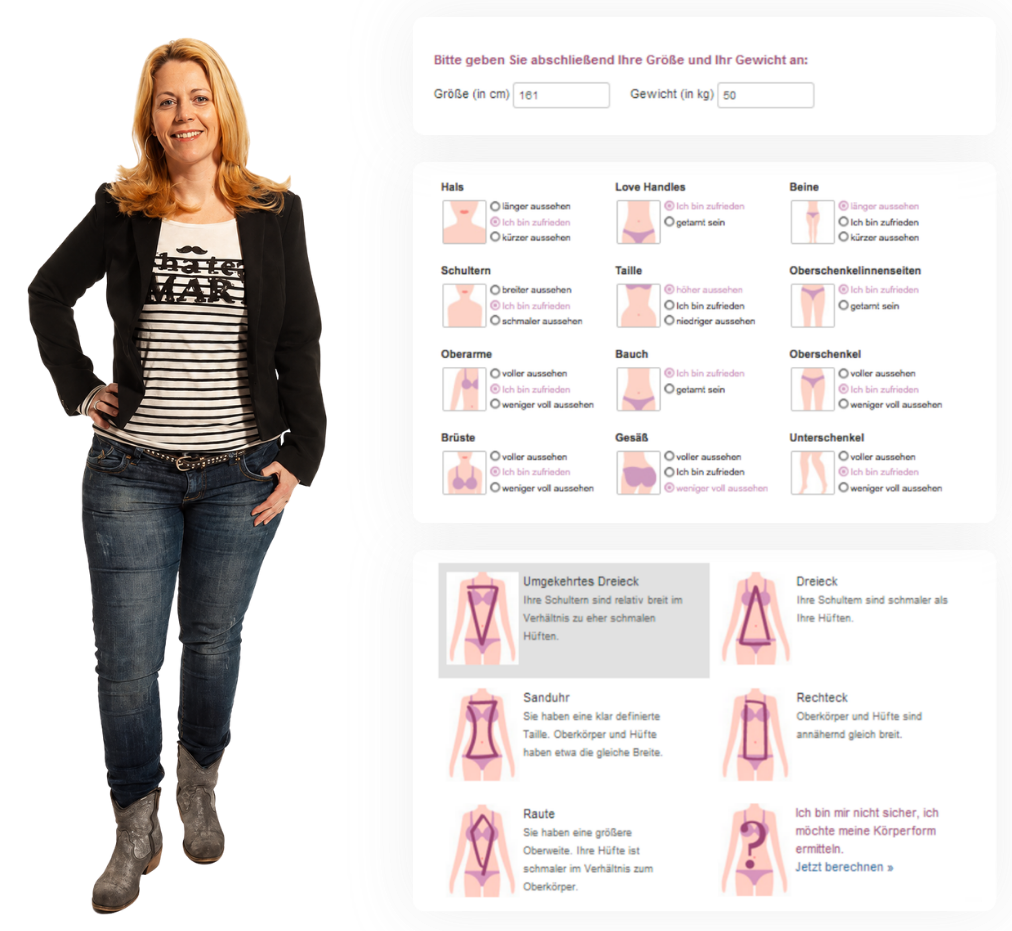
To provide truly personalised styling advice, the first challenge was to translate a person’s physical characteristics into a structured digital profile.
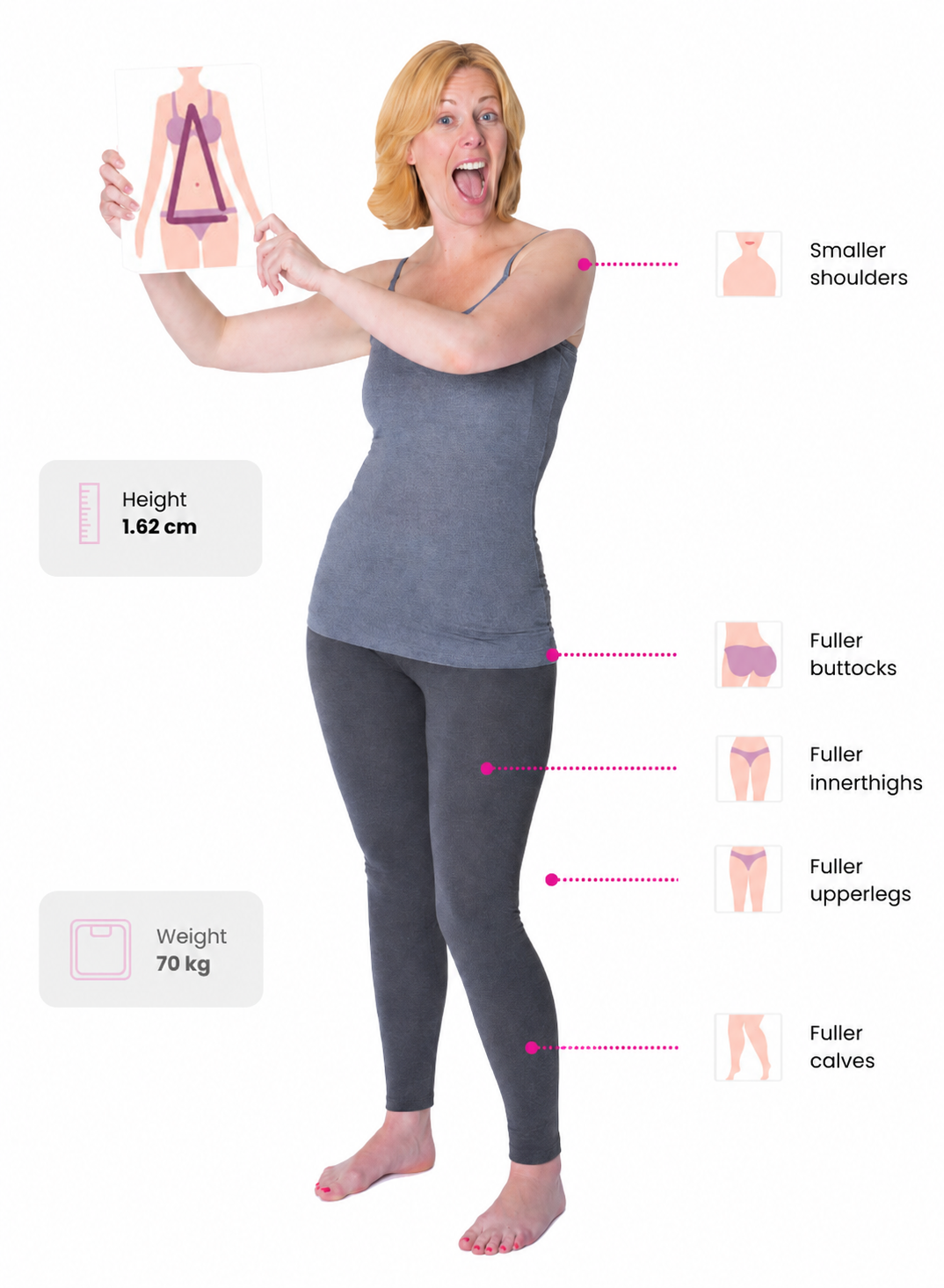
Rather than asking only for a clothing size, the system guided users through a simple registration process, combining basic measurements with visual body characteristics. Height, weight, body proportions and distinctive features were converted into a unique body profile that formed the foundation for every recommendation.
Across multiple international retail implementations, between 23% and 43% of all visitors voluntarily completed this profile—an exceptionally high participation rate considering the amount of information requested. Over time, the platform collected more than 1.24 million individual body profiles, creating a large structured dataset.
The objective was not to collect measurements, but to translate a person’s physical appearance into structured data.
Body profile = Height + Weight + Bodyshape + Body characteristics
Understanding the body profile
Creating a body profile was only the first step. The real challenge was understanding what those measurements actually meant.
Rather than assigning customers to a single body shape, the methodology analysed a combination of body characteristics that together determined how garments would visually interact with the body. Height, proportions, body shape and individual features were interpreted as a single, integrated profile rather than as isolated measurements.
This approach recognised that no two women are exactly alike. Two women with the same body shape, height and weight could still receive different styling advice because subtle differences in their proportions and body characteristics created a different visual balance.
By translating physical characteristics into structured data, the platform established a consistent and scalable foundation for personalised styling recommendations.
From body profile to personalised styling advice
The objective was never to tell women what to wear. It was to teach them how to recognise clothing that truly suited their body.
Every figure analysis was generated specifically for the individual user. The platform dynamically selected explanations, illustrations, outfit examples, celebrity comparisons and follow-up emails based on her unique combination of body characteristics.
Instead of generic fashion advice, women learned why certain necklines, silhouettes and design details created visual balance, while others did not. As their understanding grew, every new article and newsletter continued to build on their personal profile.
Because every text, image and example was personalised, no two figure analyses or email journeys were ever the same. The technology is capable of generating over 125 million possible personalised newsletter combinations.
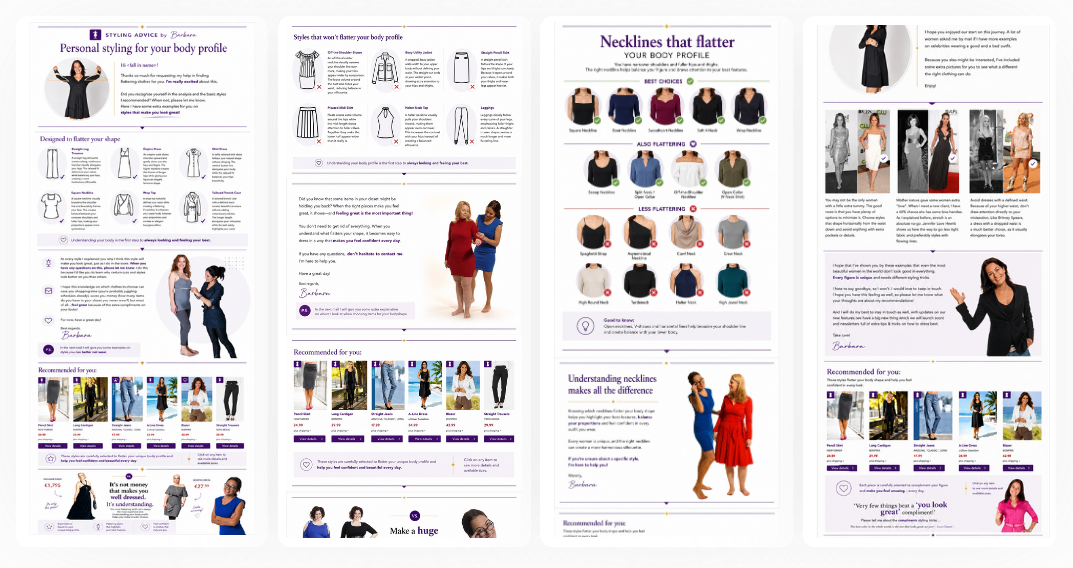
No two newsletters are ever the same. Each one is uniquely created based on her body profile,
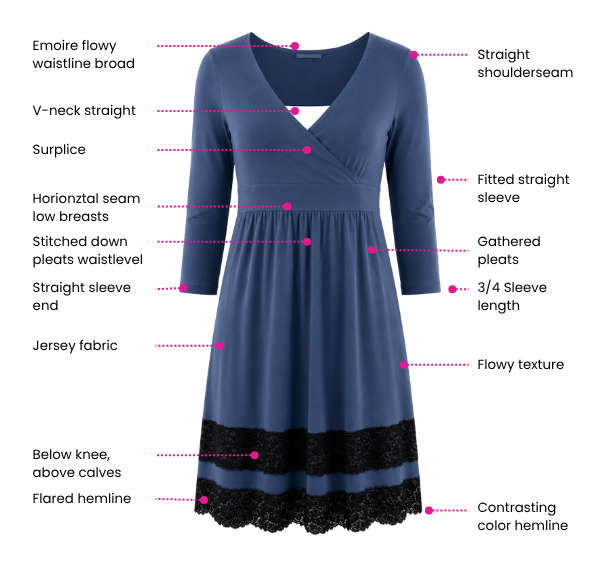
Every dress is analysed using more than 350 characteristics
Analysing every garment
Understanding the customer was only half of the equation. To generate meaningful styling advice, every garment first had to be understood in exactly the same way.
A garment is far more than a product. It is a combination of design choices that each influence visual balance in a different way.
Rather than describing products using only traditional retail attributes such as size, colour or brand, each garment was analysed according to hundreds of styling characteristics. Necklines, sleeve shapes, waistlines, silhouettes, fabrics, prints, proportions, decorative details and many other design elements were systematically classified using a structured tagging methodology.
This transformed every garment into a detailed digital profile that could be directly compared with an individual’s body profile. Instead of simply identifying what a garment was, the platform understood how it would visually interact with different body characteristics.
By applying the same analytical framework to both the customer and the garment, personalised styling recommendations could be generated consistently and at scale.
The connection between body profiles and garment analysis
The styling formule
Creating a detailed body profile and analysing every garment independently solved only part of the challenge. The real innovation was combining both datasets into one consistent decision model.
Every body profile was systematically compared with every analysed garment, allowing the platform to evaluate how specific design elements would visually interact with individual body characteristics. Rather than recommending products based on popularity or previous purchases, recommendations were generated from the relationship between the person and the garment itself.
This created a scalable methodology capable of producing personalised recommendations consistently across thousands of products.
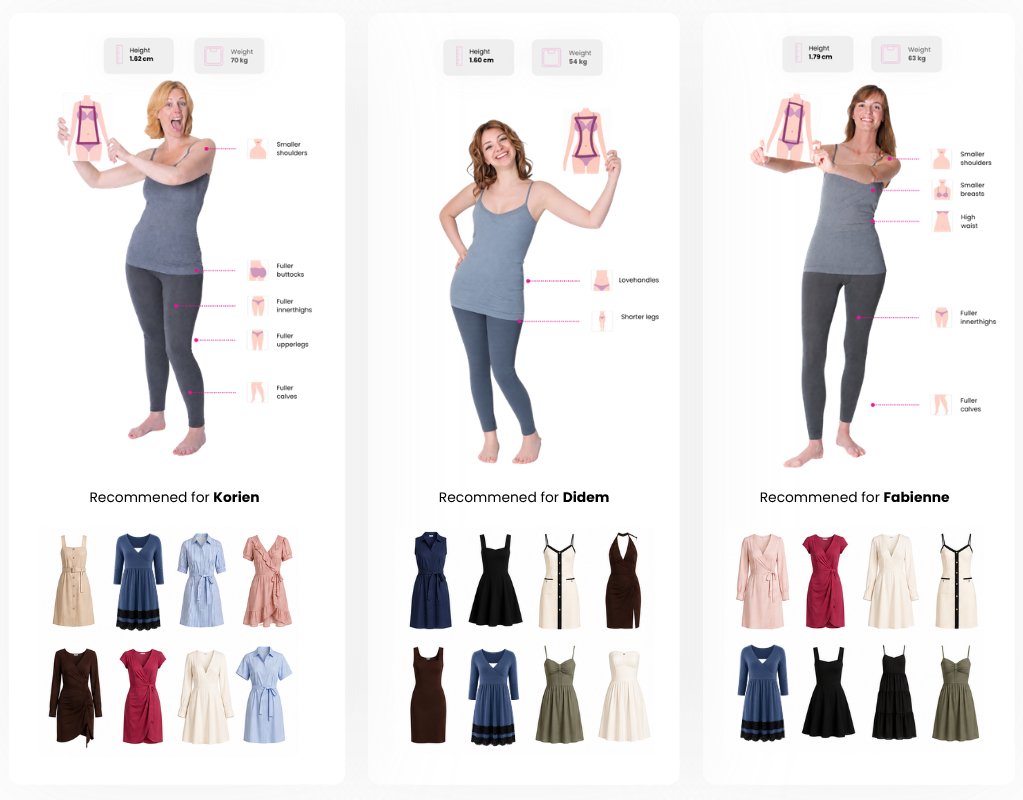
Every woman gets her own personal shop
Once the methodology has determined how every analysed garment interacts with a customer’s unique body profile, it can generate a completely personalised product selection.
Instead of browsing the same catalogue as everyone else, each customer receives a personal shop containing only garments that are likely to create visual balance for her individual body profile.
Although thousands of products may be available, every woman sees a different collection.
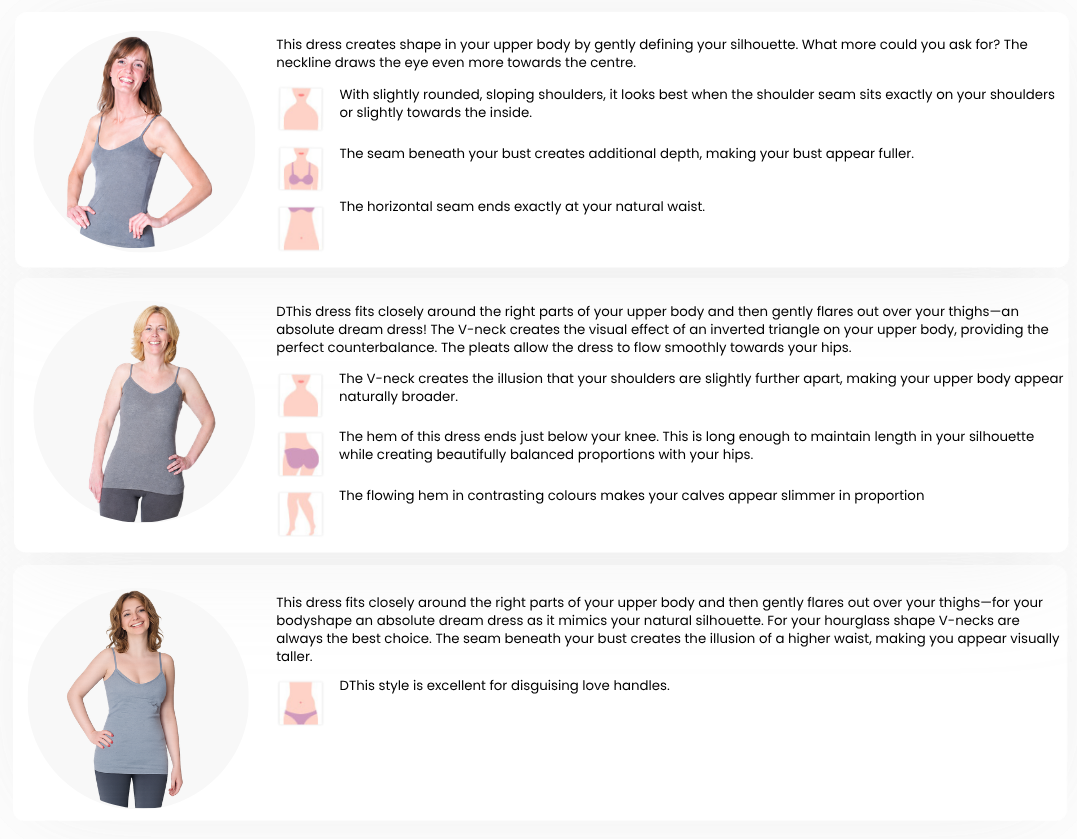
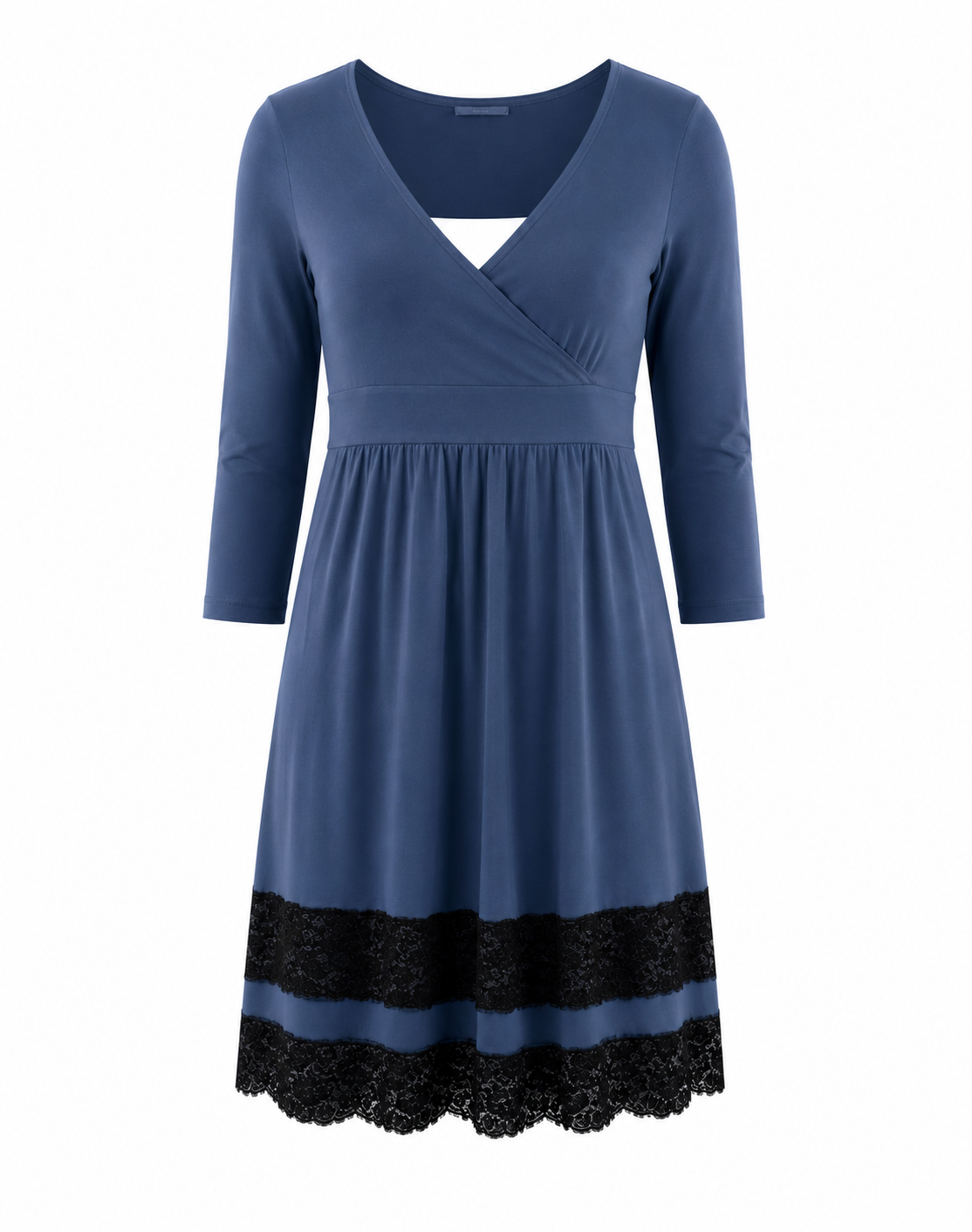
One dress. Three different explanations.
Personal styling is about understanding why a garment works. Although these three women receive the same dress recommendation, it is never for the same reason. Every recommendation is based on the individual body profile, with advice that explains exactly why the item works for her. This creates styling advice that is personal, transparent and easy to understand.
Every recommendation is generated from the relationship between the garment’s
Turning styling into technology
Personalisation is not about recommending different products. It is about understanding why a garment works for one person and not for another.
By translating both the individual and the garment into structured data, the methodology creates an objective connection between the two. Once that relationship becomes measurable, personalised styling is no longer based on opinion or intuition, but on a consistent and scalable decision model.
The same methodology can power personalised styling education, dynamic newsletters, product recommendations and individual shopping experiences—all generated from a single structured body profile.
Rather than showing every customer the same products, the platform helps each woman understand what creates visual balance for her unique body profile and explains why.
‘Because every woman is unique, her styling advice should be too’